Lionel Trains: A Century of American Model Railroading
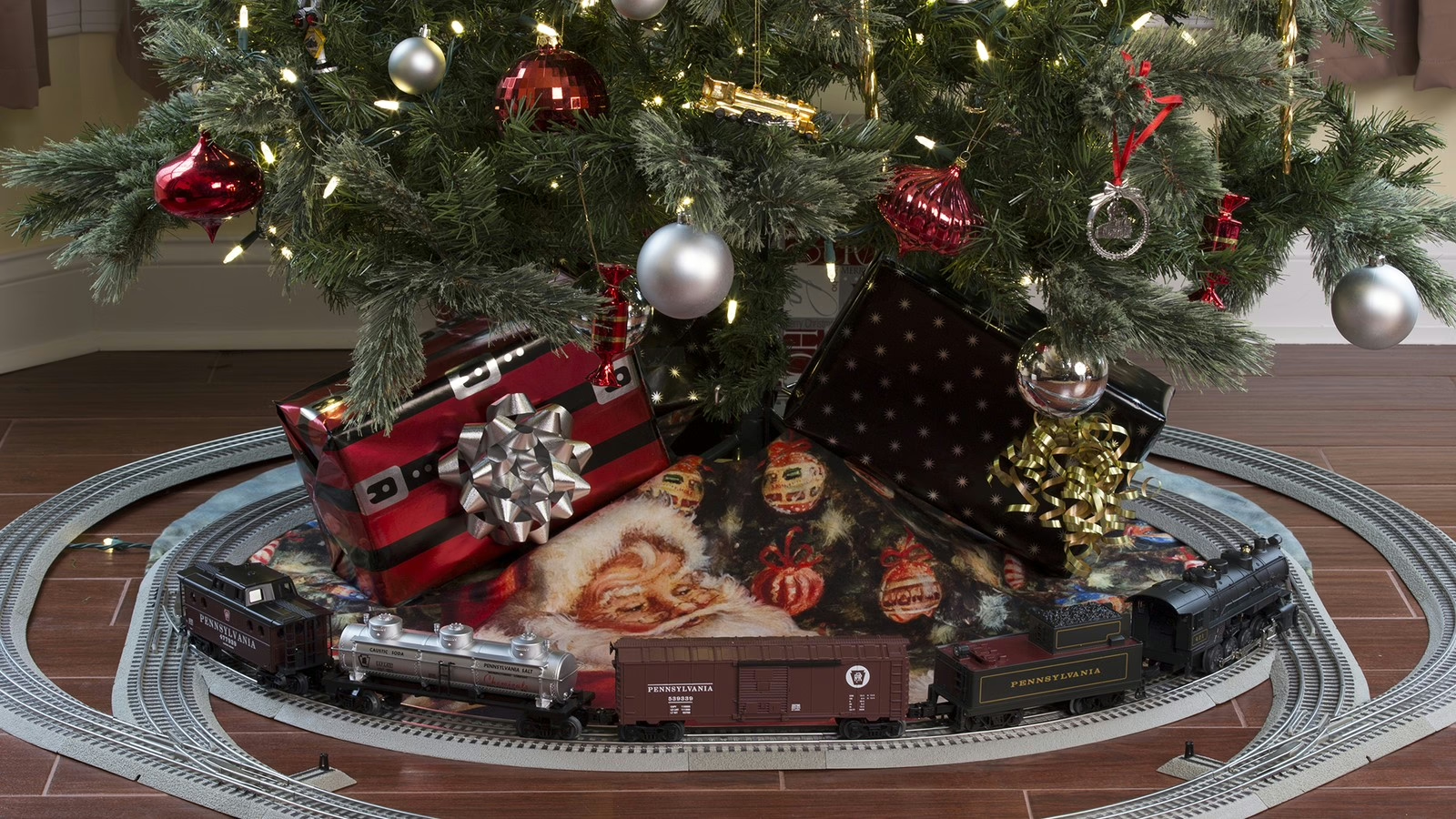
For more than a century, Lionel Trains has occupied a singular place in American culture. Few brands—inside or outside of the hobby world—carry the same emotional weight, generational loyalty, and instant recognition. For many, Lionel is not simply a model train company; it is the company that introduced them to railroading in miniature, often during childhood holidays when an O gauge train circled the Christmas tree. Over time, Lionel evolved from a novelty maker into a cornerstone of the model railroading hobby, shaping standards, expectations, and traditions that continue to influence enthusiasts today.
This article explores Lionel’s origins, its lasting significance to the hobby, how the brand has adapted in the modern era, and what today’s buyers should know when choosing Lionel products. We’ll also look closely at track options and finish with curated Amazon bestseller recommendations for train sets, rolling stock, and accessories.
The Origins of Lionel: From Electric Novelties to Household Name
Lionel was founded in 1900 by Joshua Lionel Cowen, initially as an electrical novelties company rather than a toy manufacturer. Early Lionel products were intended to draw attention to store displays—battery-powered moving objects meant to catch a shopper’s eye. One of these novelties happened to be a small electric train, and its popularity quickly outpaced the original intent. Consumers didn’t just want to watch trains move in storefronts; they wanted to take them home.
By the 1910s and 1920s, Lionel had firmly established itself as the leading manufacturer of electric toy trains in the United States. The company leaned heavily into innovation, introducing stronger electric motors, improved control systems, and increasingly realistic locomotives and rolling stock. During this era, Lionel trains were aspirational items—often expensive, well-built, and designed to last. Ownership became a mark of quality, and many early sets survived decades of use.
The Golden Age and Cultural Impact
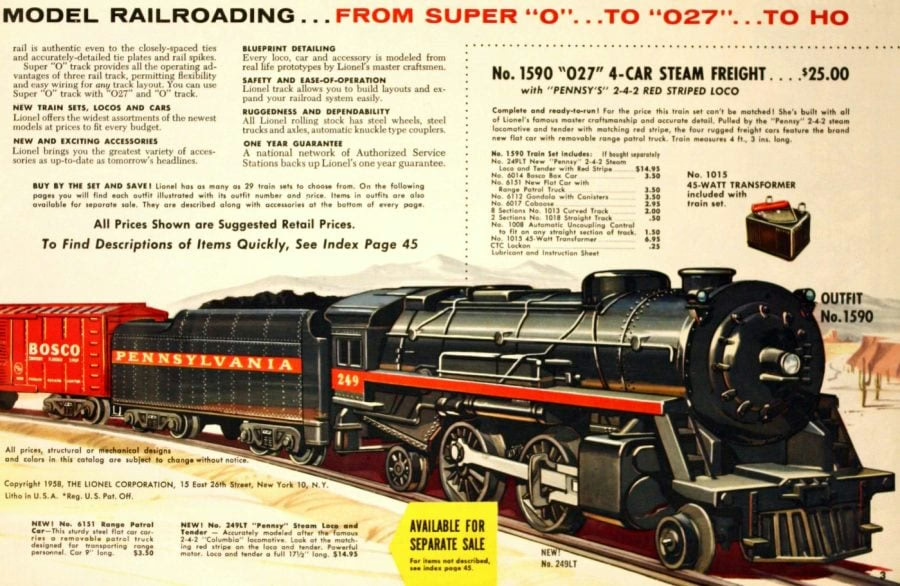
Lionel’s true golden age arrived in the post–World War II years, roughly from 1945 through the late 1950s. Returning prosperity, suburban growth, and a booming middle class created ideal conditions for hobby-based toys. Lionel capitalized on this moment with aggressively marketed O gauge train sets that combined rugged construction with dramatic operating features—smoking locomotives, operating couplers, illuminated cars, and animated accessories.
What set Lionel apart during this time was not just engineering, but storytelling. Catalogs didn’t merely list products; they presented miniature railroads as entire worlds filled with action, sound, and movement. This vision cemented Lionel trains as a gateway hobby, one that blended mechanical curiosity, imagination, and craftsmanship. Even today, many seasoned hobbyists trace their lifelong interest in railroading directly back to a childhood Lionel set.
Did You Know?
Lionel once produced model trains that were so powerful they could pull a full-grown adult across a floor on a rolling chair. In the post–World War II era, Lionel motors were intentionally overbuilt to ensure reliability, which is one reason many 1940s and 1950s Lionel locomotives still run today. That reputation for durability helped cement Lionel’s status as the gold standard of American model trains.
Challenges, Reinvention, and the Modern Lionel Brand
Like many legacy toy companies, Lionel faced serious challenges in the 1960s and 1970s as consumer tastes shifted and competition increased. Changes in ownership and manufacturing approaches diluted the brand for a time. However, Lionel’s enduring appeal never disappeared entirely, and by the late 20th century the company began re-centering itself around quality, nostalgia, and technological advancement.
Modern Lionel operates with a dual focus. On one side, it continues to produce entry-level sets designed for families and newcomers. On the other, it offers high-end, feature-rich locomotives aimed squarely at adult hobbyists and collectors. Advances in digital sound systems, remote control operation, Bluetooth connectivity, and realistic detailing have allowed Lionel to stay relevant while honoring its roots.
Why Lionel Still Matters to the Hobby
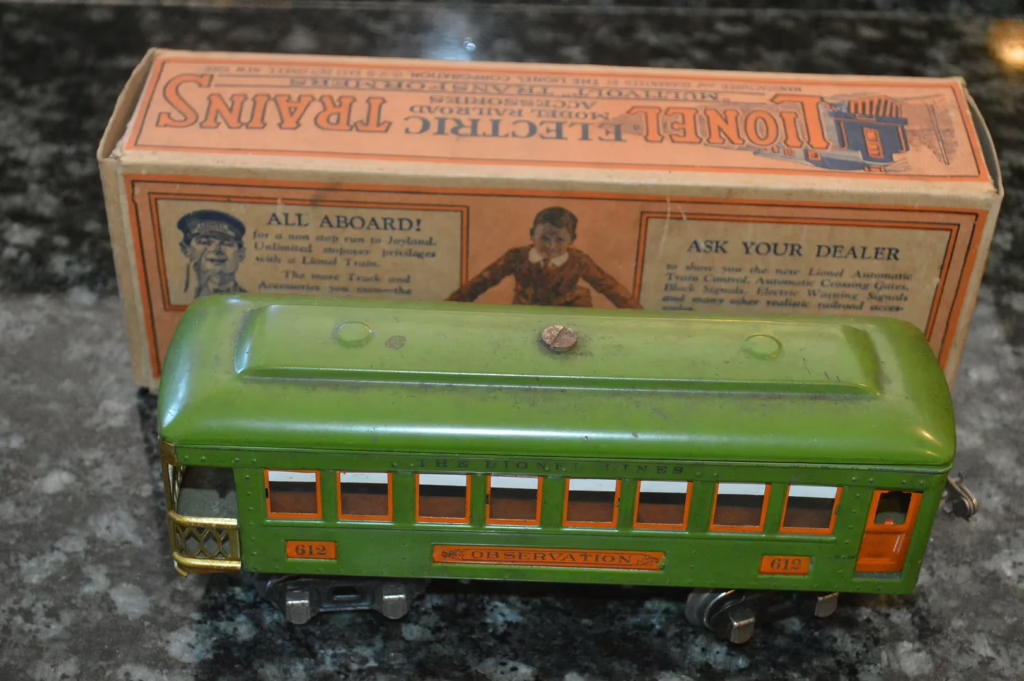
Lionel’s importance to model railroading goes beyond its own product catalog. The company helped define O gauge as a standard, popularized three-rail track systems, and normalized the idea that model trains could be both toys and serious hobby equipment. Many accessory manufacturers, layout designers, and aftermarket companies still design products with Lionel compatibility in mind.
Perhaps more importantly, Lionel continues to serve as a bridge between generations. A parent or grandparent who grew up with Lionel trains can introduce the hobby to younger family members using a modern set that feels familiar yet technologically updated. Few brands in the hobby offer that kind of continuity.
Understanding Lionel Track Options
Lionel is best known for its O gauge three-rail system, which prioritizes reliability and ease of use over strict prototype realism. This design allows for simple wiring, consistent electrical pickup, and forgiving operation—especially valuable for beginners or seasonal layouts.
The most common modern option is Lionel FasTrack, a molded roadbed system with integrated rails. FasTrack snaps together easily, provides built-in ballast appearance, and supports both traditional transformers and modern digital control systems. For hobbyists seeking a more classic look, Lionel also continues to support tubular O gauge track, which remains popular among traditionalists and those restoring vintage layouts.
Choosing the right track system often comes down to layout permanence and aesthetic goals. FasTrack excels in temporary or modular setups, while tubular track offers flexibility and nostalgia for permanent layouts. Both remain fully supported within the Lionel ecosystem.
Top 5 Lionel Train Sets (Amazon Best Sellers)
For newcomers and returning hobbyists alike, these train sets represent the easiest entry point into the Lionel ecosystem. Each combines locomotive, rolling stock, track, and control systems in a single package, reducing setup complexity while delivering the classic Lionel experience. Once a layout is up and running, many owners find themselves expanding beyond the original set—adding sidings, upgrading locomotives, or introducing accessories that transform a simple loop into a miniature railroad.
Top 5 Lionel Cars & Rolling Stock (Amazon Best Sellers)
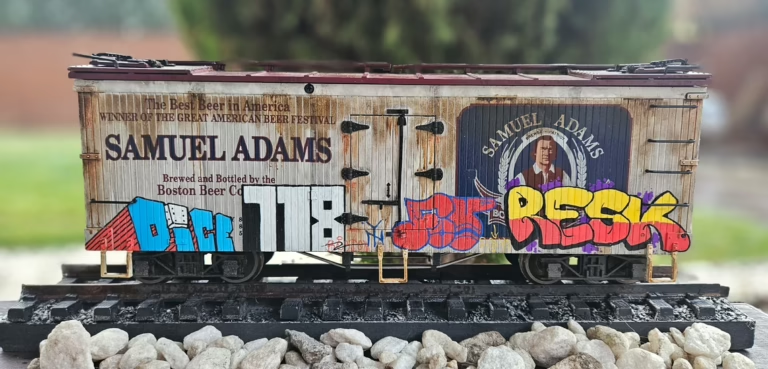
Rolling stock is where personalization truly begins. Adding specialty cars, themed boxcars, or illuminated passenger coaches allows a layout to tell a story that reflects individual interests—whether that’s classic freight operations, seasonal displays, or nostalgic branding. These cars also tend to be some of the most gift-friendly Lionel products, making them ideal additions for collectors who already own a core set.
Top 5 Lionel Accessories & Layout Items (Amazon Best Sellers)
Accessories are often what elevate a Lionel layout from a train loop to a living scene. Operating crossings, animated figures, lighting elements, and sound-equipped structures introduce motion and interaction beyond the trains themselves. Over time, these details create the immersive environments that keep hobbyists engaged long after the initial setup.
Lionel in Today’s Hobby Landscape
While the model railroading hobby has diversified into many scales and specialties, Lionel remains a dominant force in O gauge. Its emphasis on durability, innovation, and emotional connection continues to attract both casual users and dedicated enthusiasts. Modern control options allow Lionel trains to coexist comfortably alongside contemporary hobby expectations, while the brand’s heritage ensures that even new products feel connected to a larger tradition.
For collectors, Lionel offers a vast secondary market and strong long-term value. For operators, it provides reliability and ease of expansion. For families, it offers an accessible way to share a hands-on hobby across generations.
Collector Insight
Many modern Lionel locomotives are designed to run on both traditional transformers and digital control systems. This backward compatibility allows long-time collectors to integrate new purchases into older layouts without rewiring—something few model train brands support as well consistently.
Conclusion: More Than a Train Company
Lionel Trains is more than a manufacturer—it is a cultural institution within model railroading. From its early days as an electric novelty maker to its current role as a leader in O gauge innovation, Lionel has consistently shaped how people experience miniature railroads. Its products invite participation, creativity, and nostalgia in equal measure.
Whether you’re purchasing your first train set, expanding a decades-old layout, or looking for meaningful additions like rolling stock and accessories, Lionel remains one of the most reliable and rewarding choices in the hobby. Few brands can claim a legacy as deep—or a future as promising.
As an Amazon Associate, we may earn a commission from qualifying purchases made through links on this page.

One Comment
Comments are closed.