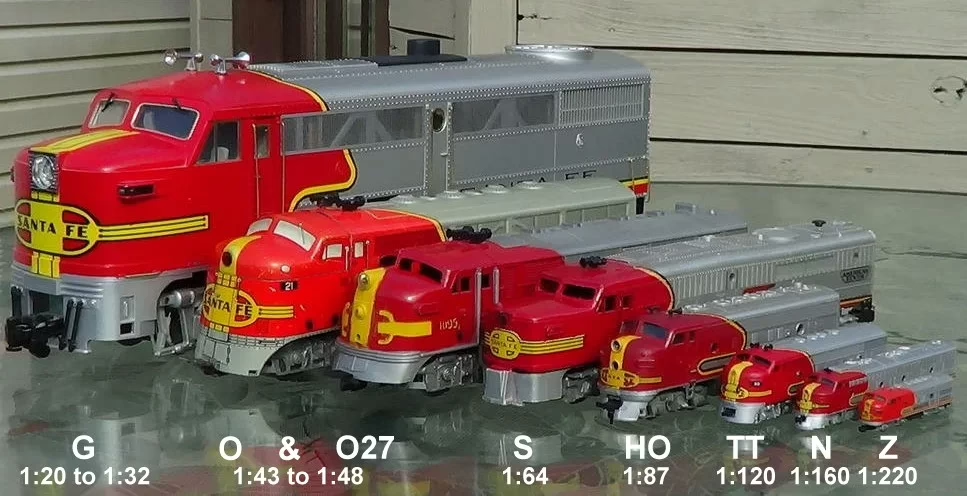
Model train scales shape how the hobby is experienced long before the first piece of track is laid. Decisions about size, proportion, and physical spacing determine what can be shown, what must be implied, and how a layout ultimately feels.
This guide series explores those foundational ideas.
Rather than focusing on products or purchasing decisions, these articles are intended as reference material—designed to clarify core concepts that apply regardless of era, scale, or modeling style. Together, they form a framework for understanding how model railroads are structured and why certain choices feel intuitive while others do not.
Understanding Model Train Scales
This guide explains how scale functions as proportion rather than mere measurement. It looks at why multiple scales exist, how scale shapes perception, and why choosing a scale is often the most consequential decision in model railroading.
Scale and Physical Reality
Scale vs Gauge: What’s the Difference?
This companion guide clarifies the distinction between scale and gauge—two terms that are often confused but describe different aspects of a model railroad. It explains how proportion and physical spacing work together to define both appearance and operation.
These guides are designed to be read independently or together. Each addresses a specific question, but all share a common goal: to make the underlying structure of the hobby easier to understand.