How Railroads Built the Industrial Midwest: The Saginaw Valley as a Transportation Powerhouse
The industrial rise of the American Midwest is often traced through the great cities—Chicago, Detroit, Cleveland, and Milwaukee—but beneath that familiar narrative lies a network of communities whose fortunes were shaped just as dramatically by the coming of the railroad. Among them, Saginaw, Michigan stands out as a region where geography, natural resources, and transportation innovation intertwined to produce extraordinary economic and social transformation.
While the Midwest as a whole benefited from the explosive spread of railroads in the 19th century, the story of Saginaw provides a remarkably clear illustration of how rail access could turn a frontier settlement into a regional industrial hub. Few places in Michigan saw railroads influence so many sectors—lumbering, salt refining, agriculture, coal, manufacturing, and eventually automotive supply chains. By examining Saginaw’s role within the broader Midwest railroad system, we gain insight not only into the city’s past, but also into the forces that shaped the growth of America’s heartland.
Did You Know?
Saginaw once ranked among the busiest railroad hubs in Michigan, handling vast shipments of lumber, coal, salt, and manufactured goods. During the late 19th century, the Saginaw Valley’s rail yards moved so much timber that the region briefly became one of the largest lumber exporters in the world. Rail spurs cut deep into the forests, allowing year-round harvesting and transforming Saginaw from an isolated frontier settlement into a major industrial center.
Before the Rails: A Region of Immense Potential, Limited Reach
Prior to the arrival of railroads, the Saginaw Valley was a region long defined by both its promise and its isolation. Its dense white pine forests, navigable rivers, and proximity to the Great Lakes made it an ideal location for early settlement and resource extraction, but transportation remained a major limitation.
- Rivers enabled movement of logs but not manufactured goods.
- Seasonal freeze restricted travel and commerce for months.
- Roads were unreliable, costly to maintain, and impassable during wet seasons.
Like many developing Midwestern regions in the early 1800s, Saginaw had the ingredients for explosive growth but lacked the infrastructure to connect with distant markets. Railroads would decisively change that.
The Railroad Arrives in Michigan—and Saginaw Takes Its Place on the Map
Michigan’s first major railroads—the Michigan Central (MC), Detroit & Milwaukee, and Grand Trunk Western (GTW)—began to spread through the state by the 1850s. As new lines extended northward and westward from Detroit, communities along the Saginaw River recognized that rail access was not simply beneficial but essential.
Saginaw and East Saginaw (then separate cities) aggressively courted railroad companies, understanding that the presence of major depots and switching yards would determine their long-term viability. Their efforts paid off:
- Michigan Central Railroad established routes that linked Saginaw to Detroit, Bay City, and Jackson.
- Grand Trunk Western created competitive east-west corridors through Flint, Saginaw, and Durand.
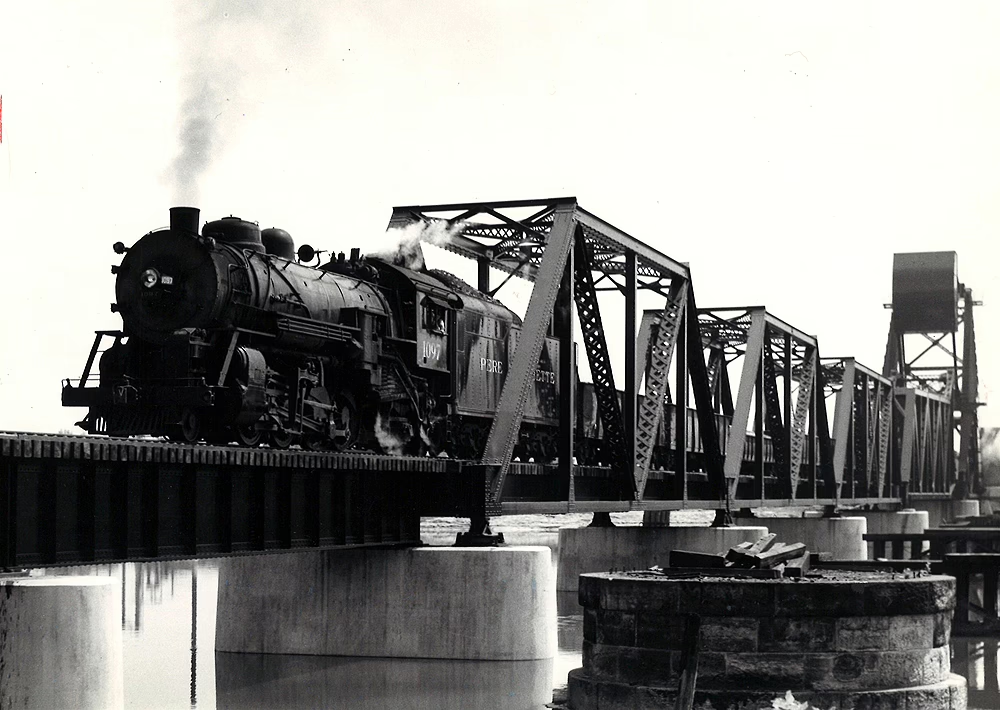
- The Pere Marquette Railway, and later its successors, became the dominant system carrying timber, salt, coal, and agricultural freight throughout the region.
By the late 19th century, Saginaw had become one of the most strategically interconnected points in Michigan’s entire transportation grid. This was not incidental—it was the result of political pressure, civic investment, and clear recognition of the area’s economic potential.
The Saginaw Lumber Boom: How Rails Amplified a Global Industry
The Saginaw Valley’s lumber boom remains one of the most dramatic episodes in Michigan history. Between the 1850s and 1890s, Saginaw and neighboring Bay City produced an astonishing volume of timber, supplying rapidly growing cities across the Midwest, Great Plains, and even New England.
While rivers initially served as the primary means of moving logs to mills and mills to market, railroads soon became indispensable:
1. Railroads Extended the Reach of the Lumber Camps
Rail lines penetrated forests far beyond navigable rivers. Where rafters and log drives could not reach, rail spurs could. This allowed lumber companies to access deeper woodlands and operate year-round rather than relying on spring floods.
2. Rail Transport Increased Output and Speed
Trains moved finished lumber to Detroit, Toledo, and Chicago at unprecedented speeds. A shipment that once took weeks by river could now reach market in a matter of days.
3. Saginaw Became a Regional Sorting and Distribution Center
The city’s yards—especially the Greenwood Yard—handled immense quantities of lumber before distributing it to secondary markets. Rail yards became central hubs of activity, employing scores of loaders, clerks, and yard crews.
4. Railroads Drew Thousands of Workers Into the Saginaw Valley
Immigrant laborers, millwrights, and tradesmen followed the rail lines into the region. Saginaw’s population boomed as families poured in seeking opportunity. The city’s permanent neighborhoods, schools, places of worship, and businesses all rose from this influx.
In short, timber built Saginaw—but railroads allowed the city to expand beyond its natural limits and reach national prominence.
Quick Facts: Saginaw & Michigan Railroad History
• First rail service reached Saginaw: 1850s
• Major railroads serving the region: Michigan Central, Grand Trunk Western, Pere Marquette
• Key industries powered by rail: Lumber, salt, coal, agriculture, manufacturing
• Peak of the lumber boom: 1870s–1890s
• Saginaw’s primary freight hub: Greenwood Yard
• Passenger rail importance: Connected Saginaw to Detroit, Bay City, Flint, Chicago & Toronto
• Notable locomotive tied to Michigan history: Pere Marquette 1225
• Modern operators in the region: CSX, Canadian National
• Why Saginaw thrived: Unique mix of natural resources + strategic rail access
• Legacy today: Railroads still support agriculture, manufacturing, and intermodal freight
Beyond Lumber: Railroads Fuel Saginaw’s Industrial Diversification
As timber resources waned in the late 19th century, Saginaw faced a critical turning point. Without adaptation, many lumber-dependent cities in North America declined sharply. However, Saginaw’s diversified rail network allowed the city to pivot into new industries with remarkable speed.
Salt Mining and Chemical Production
Saginaw’s salt industry emerged almost accidentally—early oil and salt wells revealed immense brine deposits. Railroads played a vital role in transporting salt to eastern markets where demand was high for both industrial and food-preserving purposes. Rail access kept the local salt business profitable long after other regions struggled.
Coal Mining and Coke Production
Small coal operations throughout the Saginaw Valley relied on rail sidings to move their product. Trains carried coal to foundries, heating plants, and manufacturing centers. Without rail access, coal extraction in the region would have been economically impossible.
Agricultural Expansion and Food Processing
With abundant farmland surrounding the city, Saginaw developed grain elevators, flour mills, and later sugar beet processing facilities. Railroads allowed perishable goods to reach markets in Chicago, Cleveland, and Detroit while still fresh.
Manufacturing and the Early Automotive Era
By the early 20th century, Saginaw had grown into a respected manufacturing center. Foundries, machine shops, and parts suppliers thrived—many directly supporting the expanding automotive industries in Flint and Detroit. Railroads ensured steady delivery of raw materials and provided efficient outbound routes for finished goods.
The result was a broadly diversified industrial landscape that remained viable long after the lumber era ended.
Saginaw as a Regional Rail Hub
Few Michigan cities could match the rail infrastructure concentrated in the Saginaw Valley during its peak.
The Switching Yards
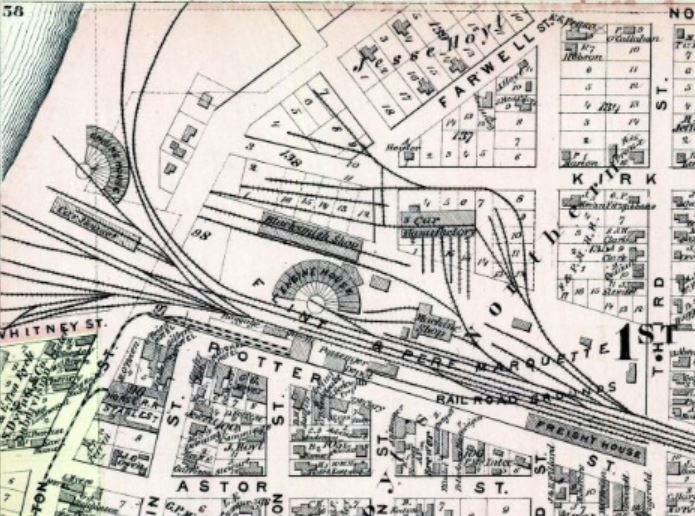
The Greenwood Yard and nearby facilities served as essential interchange points where freight was sorted, assembled, and routed across the state. Saginaw’s yards connected north–south and east–west corridors, making the valley an indispensable link in Michigan’s supply chain.
Passenger Services
Before the dominance of automobiles, passenger rail was a lifeline. Trains carried residents to:
- Detroit for business
- Bay City for shipping and industry
- Flint for factory work
- Grand Rapids and Lansing for commerce
- And even further connections to Chicago and Toronto
Stations in Saginaw and East Saginaw were civic landmarks—points of arrival for new residents and gateways for workers traveling the region.
Telegraphy and Dispatching
As railroads expanded, so too did the systems needed to coordinate them. Telegraph lines paralleled the tracks, making Saginaw a communication hub where dispatchers controlled the movement of trains throughout the lower peninsula.
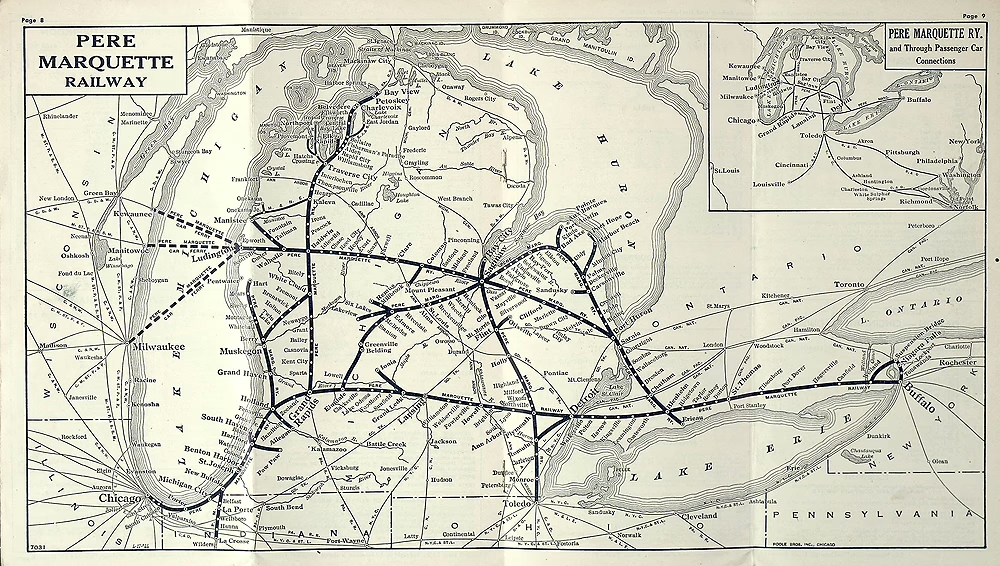
The Midwest Connection: How Saginaw Fit Into a Larger Industrial Story
Although Saginaw’s development is unique, it echoes the broader transformation of the Midwest:
- Chicago became the largest rail city in the world.
- Detroit’s automotive boom relied heavily on Michigan’s intrastate railways.
- Ohio and Indiana used railroads to grow steel, coal, and manufacturing.
- Wisconsin and Minnesota shipped grain, ore, and timber via vast rail networks.
Railroads unified the region economically, weaving cities into a framework of shared industrial growth. Saginaw, with its deep connections to lumber, agriculture, and manufacturing, stood as a microcosm of that greater Midwestern evolution.
Decline, Consolidation, and the Changing Role of Railroads
By the mid-20th century, automobiles and trucking began to reshape transportation. Passenger services dwindled; industries restructured; major rail lines merged or ceased operations. The once-independent Pere Marquette was absorbed into the Chessie System and eventually became part of CSX Transportation. The Grand Trunk Western found its way into the Canadian National system. The Michigan Central’s legacy was divided among Conrail successors.
Yet railroads never disappeared from Saginaw—they merely changed roles. Today the region remains active in freight operations, supporting:
- Agricultural exports
- Manufacturing supply chains
- Petrochemical products
- Bulk materials and plastics
- Intermodal transfer points
The same infrastructure that built the region continues to contribute to its economic life.
Suggested Further Reading
Suggested External Resources
For readers who wish to study Saginaw and Michigan’s railroad heritage in greater depth, you can find more information at the following sites:
- Michigan Railroads Association – Historical Archives https://www.michiganrailroads.com
- Library of Congress – Railroads Engineering Record https://www.loc.gov/pictures/collection/hh/
As an Amazon Associate, we may earn a commission from qualifying purchases made through links on this page.