This guide is part of a foundational series on model train scales—how size, proportion, and physical constraints shape the hobby. Rather than focusing on products or purchasing decisions, these guides explore the underlying concepts that determine how model railroads are designed, experienced, and understood.
Understanding Model Train Scales
A model train scale describes the proportional relationship between a model train and the full-size train it represents. When people ask what model train scales are, they are usually trying to understand how size, proportion, and space work together—and why the same locomotive can exist in dramatically different forms.
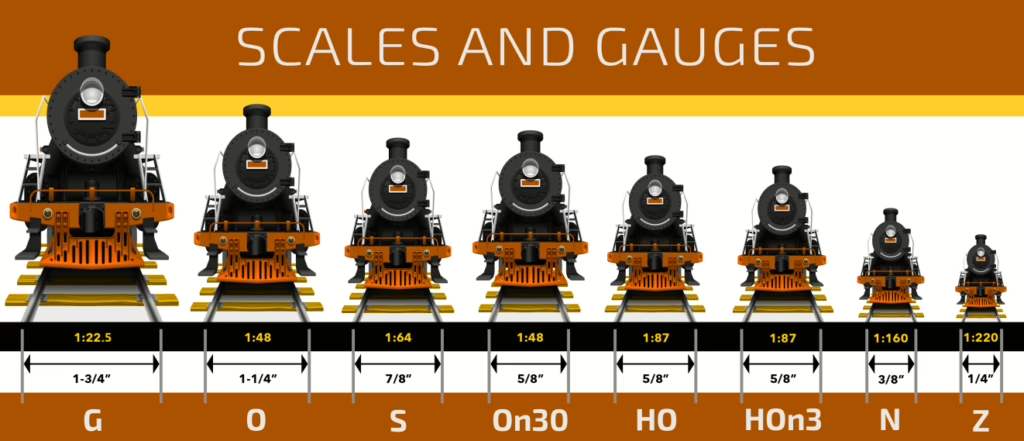
A scale of 1:87, for example, means that one unit of measurement on the model equals eighty-seven of the same units on the prototype. Inches become feet. Feet become yards. Entire railroads shrink to a size that can fit inside a room.
Scale as Proportion, Not Just Measurement
Scale is often introduced as a numerical ratio, but that definition is incomplete.
Scale is a decision about perspective.
It determines how much of the world can be shown, how much detail can be included, and how space is experienced within a layout. Scale shapes what is emphasized and what must be implied.
Different scales exist because no single size can serve every purpose.
Why Different Model Train Scales Exist
Some hobbyists want long trains moving through expansive scenery. Others want physical presence, mechanical detail, and visual weight. Scale determines which of these goals can be achieved within a given space.
Smaller scales allow for broader scenes and longer runs. Larger scales emphasize detail and tactile realism.
Each scale represents a different compromise—not a different level of quality.
How Scale Shapes Perception
Scale quietly influences how a layout feels.
A mountain in one scale might be a suggestion in another. A yard that feels expansive in HO may feel compressed in N, or overwhelming in O. These differences are not technical flaws; they are perceptual outcomes.
Choices about scale determine whether a layout feels intimate, monumental, or somewhere in between.
Scale and Its Relationship to Gauge
One of the most common sources of confusion is the difference between scale and gauge.
Scale describes proportion. Gauge describes the distance between the rails.
While related, they are not the same thing. Multiple scales can—and often do—share the same track gauge. The distinction between the two is explored more fully in our guide to scale versus gauge, which looks at how proportion and physical spacing interact.
Choosing a Scale as a Foundational Decision
Scale is often the first and most important decision in model railroading.
It defines the boundaries within which everything else must operate. Track planning, scenery, rolling stock, and operating style are all downstream of that initial choice. Once a scale is chosen, a kind of internal logic takes over.
Scale as a Creative Constraint
In this way, model train scales function much like formal structures in other creative disciplines.
Constraints do not limit expression. They focus it.
A smaller scale invites economy and implication. A larger scale invites presence and detail.
Both reward attention.
Why Scale Matters
Understanding scale is less about memorizing ratios than it is about recognizing intent. Each scale represents a way of seeing—an agreement between builder and world about what will be emphasized and what will be left to the imagination.
Meaning does not depend on size. It depends on relationships.