Kato Unitrack vs. Atlas Flex Track: Which Is Best for HO & N Scale Layouts?
When it comes to building a smooth-running, great-looking model railroad, the choice of track matters just as much as the locomotives you run. Two of the most popular options—Kato Unitrack and Atlas Flex Track—offer very different strengths depending on your skill level, modeling style, and long-term goals. Whether you’re running HO scale Code 83 or N scale Code 80, this guide breaks down everything you need to know before choosing the right system for your layout.
What Makes Kato Unitrack Special?
Kato Unitrack is designed for modelers who want fast setup, high reliability, and clean presentation without the tedious steps of ballasting and shaping track. Its integrated roadbed makes it extremely beginner-friendly, while its precise joiners keep electrical flow consistent.
Best for: temporary layouts, modular setups, club running, and anyone who prioritizes convenience.
Why Atlas Flex Track Remains a Classic
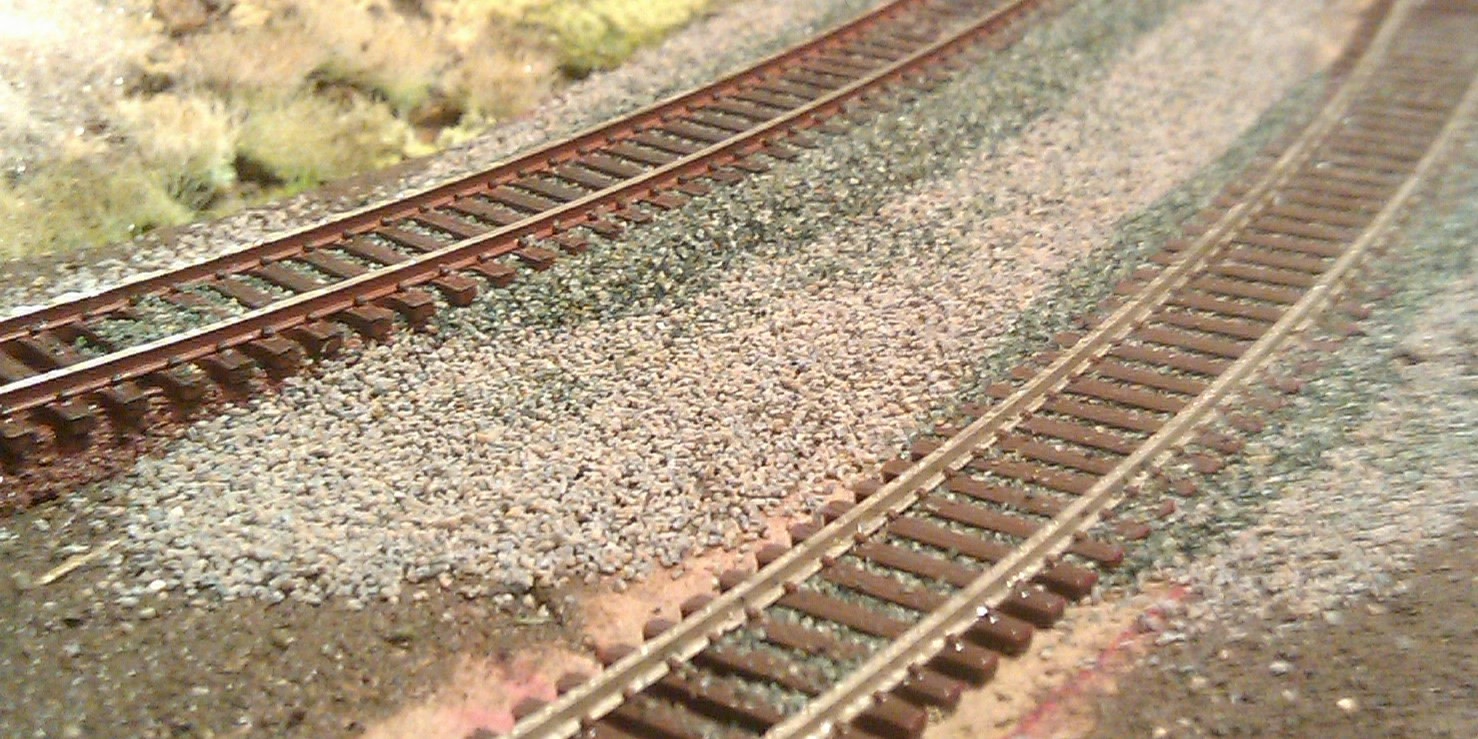
Atlas Flex Track has been a hobby standard for decades because it gives modelers total creative control. You can bend curves to any radius, weather the rails, choose your own ballast colors, and make trackwork look truly realistic. Flex track takes longer to install, but the payoff in appearance is hard to beat.
HO Scale Track Options: Code 83
For HO scale, Code 83 is the gold standard for realism.
- Kato Unitrack HO Code 83 offers smooth ballasted track that clicks together easily.
- Atlas HO Flex Track Code 83 is ideal for permanent setups and weathered mainlines.
Use Unitrack if you want fast assembly. Choose Atlas if you enjoy customization and detailed scenery.
N Scale Options: Code 80 vs. Unitrack
In N scale, Code 80 remains the most common and compatible rail height.
- Kato N Scale Unitrack uses a proprietary rail height but integrates perfectly with its own switches and crossings.
- Atlas N Scale Flex Track Code 80 gives you full freedom to design intricate curves and highly realistic right-of-way scenes.
If realism or advanced layout design is your priority, flex track leads the way. If dependability and quick changes matter more, Unitrack wins.

Kato Unitrack
|

Atlas Flex Track
|
|
|---|---|---|
| Track Type | Sectional w/ roadbed | Bendable flex track |
| Ease of Use | Very easy; perfect for beginners | Moderate; cutting + shaping required |
| Setup Speed | Extremely fast | Slower, hands-on |
| Rail Codes | HO: Code 83 / N: Kato standard | HO: Code 83 / N: Code 80 |
| Appearance | Molded ballast, clean but uniform | Requires ballast; highly realistic |
| Curve Flexibility | Fixed radii | Any radius you can shape |
| Durability | Excellent joiners | Depends on installation |
| Best For | Quick builds, modular layouts | Permanent, scenic layouts |
Final Thoughts
Both track systems are excellent—it simply depends on your modeling style. Kato Unitrack is unbeatable for quick setup and reliability. Atlas Flex Track is the choice for custom scenes, realistic mainlines, and long-term builds. HO modelers will love Code 83’s realism, while N scalers get the most versatility from Atlas Code 80.
As an Amazon Associate, we may earn a commission from qualifying purchases made through links on this page.